Rubber properties
| Type | Advantages | Limitations |
|---|---|---|
| NBR |
|
|
| FPM (VITON) |
|
|
| ACM |
|
|
|
|
|
| SIL |
|
|
| EPDM |
|
|
| PTFE |
|
|
| HNBR |
|
|
| SBR |
|
|
Common used rubbers
| Type | Name | ASTM |
|---|---|---|
| NBR | Nitrile rubber | BF,BG,BK,CH |
| FPM (VITON/FKM) | Fluorocarbon rubber | HK |
| ACM | Polyacrylate rubber | DF,DH |
| SIL | Silicone rubber | FC,FE,GE |
| EPDM | Ethylene propylene rubber | BA,CA,DA |
| PTFE | Polyterafluoro ethylene | |
| PU | Urethane rubber | BG |
| AEM | Ethylene/Acrylic rubber (VAMAC) | EE,EF,EG |
| CR | Chloroprene rubber | BC,BE |
| HNBR | Hydrogenated NBR rubber | DH |
| SBR | Styrene Butadiene Rubber | AA |
Rubber specifications
| NBR | FPM | ACM | SIL | EPDM | PU | CR | SBR | |||
|---|---|---|---|---|---|---|---|---|---|---|
| Tensile Strength | ● | ● | ▼ | ▼ | △ | ◎ | ● | △ | ||
| Elongation | ● | ▼ | ▼ | ◎ | ● | ◎ | ● | △ | ||
| Rebound Resistance | ● | △ | △ | △ | ● | ◎ | ◎ | △ | ||
| Tear Resistance | ● | △ | ▼ | ▼ | △ | ◎ | ● | △ | ||
| Abrasion-Resistance | ◎ | △ | △ | ▼ | ● | ◎ | ● | ● | ||
| Impact Strength Resistance | ● | △ | ▼ | ▼ | ● | ◎ | ◎ | ■ | ||
| Gas Impermeability Resistance | ● | ● | △ | ▼ | △ | ● | ● | ■ | ||
| Ozone Resistance | ● | ● | △ | ▼ | △ | ● | ● | ▼ | ||
| Weathering Resistance | △ | ◎ | ● | ◎ | ◎ | ● | ● | ▼ | ||
| Flame Resistance | ▼ | ◎ | ● | ◎ | ◎ | ● | ● | ● | ||
| Heat Resistance | △ | ◎ | ● | ◎ | ◎ | △ | ● | ● | ||
| Low Temperature Resistance | △ | ● | ▼ | ◎ | ● | ● | △ | ■ | ||
| Oil and Fuel Resistance | ● | ◎ | ● | △ | ▼ | ● | ■ | ▼ | ||
| Animal and Vegetable Oil Resistance | ◎ | ◎ | ◎ | ■ | ● | ● | ● | ▼ | ||
| Alcohol Resistance | ● | ● | ● | ● | ■ | ■ | ◎ | ● | ||
| Alkaline Resistance | ● | ■ | ▼ | ▼ | ● | ▼ | ◎ | ● | ||
| Acid Resistance | ● | ● | △ | △ | ● | ▼ | ● | ● | ||
| Aliphatic-solvent Resistance | ||||||||||
| - Aliphatic | ◎ | ◎ | ◎ | ▼ | ▼ | ● | ● | ◎ | ||
| - Aromatic | ■ | ◎ | △ | ▼ | ▼ | ▼ | △ | ■ | ||
| Oxygenated-Solvent Resistance | ▼ | ▼ | ▼ | △ | ◎ | ▼ | ▼ | ▼ | ||
| Water Resistance | ● | ● | ▼ | ● | ◎ | △ | ● | ● | ||
◎ Excellent
● Good
■ Suitable
△ Limited
▼ Poor
Rubber Specification Reference Table:
- Note for special type: ‘___-PL’ means oil seals are manufactured with TEFLON.
- Note: Numbers are composed of six digits. For example 4NK701 Rubber Code (4), NBR (N), Black (K), 70 SHA (7), Serial Number (01)

| MATERIAL | COLOR | HARDNESS | |||
|---|---|---|---|---|---|
| Code | >Explanation | Code | Explanation | Code | Explanation |
| N | NBR | W | White | A | 95 |
| F | FKM/VITON | K | Black | 9 | 90 |
| V | VAMAC | B | Blue | B | 85 |
| E | EPDM | R | Red | 8 | 80 |
| C | CR/NEOPRENE | T | Gray | C | 75 |
| S | SILICONE | G | Green | 7 | 70 |
| A | ACM | N | Brown | D | 65 |
| P | PU | O | Orange | 6 | 60 |
| L | FLS (LEATHER) | P | Purple | E | 55 |
| H | HNBR | C | Transparent | 5 | 50 |
| X | XNBR | Y | Yellow | F | 45 |
| R | NR | Note: Above colors are based on TCS standard, for other special colors, please take PANTONE for reference. | 4 | 40 | |
Material Temperature Range:

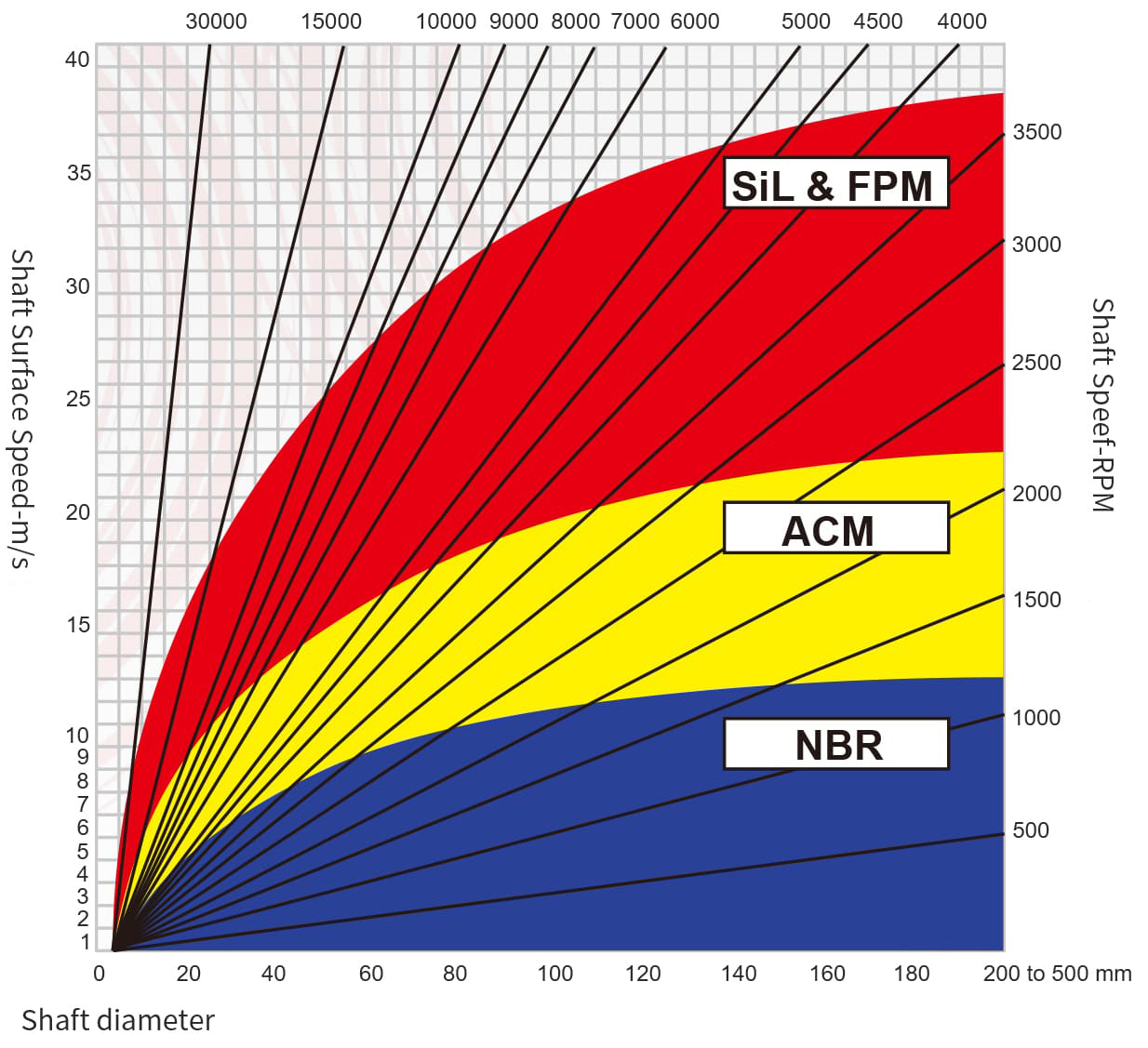
Shaft RPM, surface speed, and seal material application: