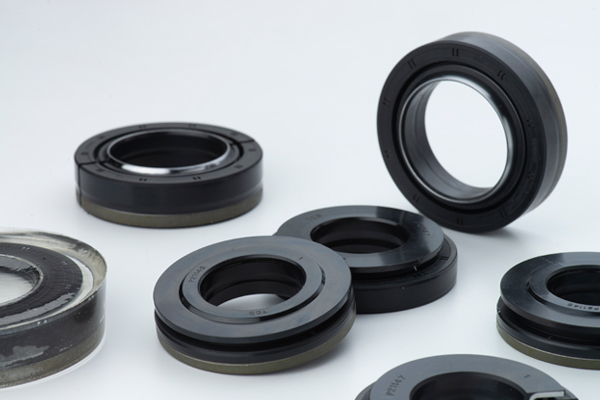
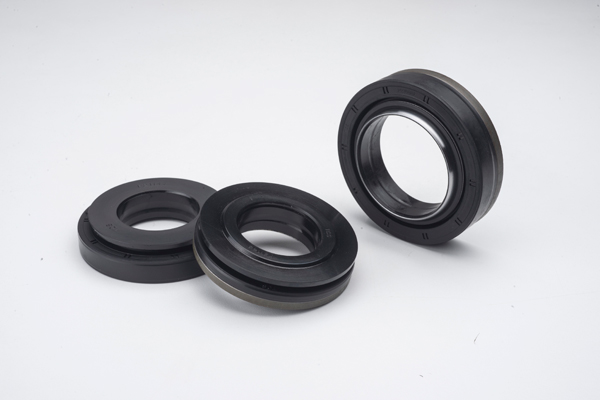
Agricultural Oil Seals for Tractors, Harvesters & Farm Machinery
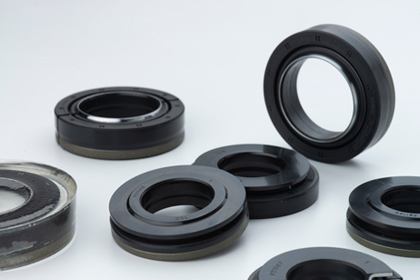
Out in the fields, seals face a daily barrage — mud that clings like wet clay after a storm, grinding dust kicked up by a plow, salt or sand on roads, constant vibration and big swings in temperature from frosty mornings to blistering afternoons. Tractors, harvesters, tillers and the rest don't just need bits of rubber and metal; they need dependable sealing parts that keep grease and oil where they belong and stop grit and water from creeping into bearings, axles, transmissions and any rotating bits. When those seals do their job, a machine keeps working; when they don't, everything that spins or turns starts asking for trouble.
Stand beside a tractor after a long day in the field and the little failures jump out: a smear of oil on a wheel hub, a lip seal that has started to harden from sun and chemicals. Picking the right oil seal for agricultural gear isn't just about stopping drips — it cuts lubricant loss, slows premature wear, and can stretch service intervals from weeks to months. For agricultural machinery makers and replacement-parts distributors that means thinking practically: choose the proper seal design and an elastomer that's compatible with the oils, fuels and temperatures it will see; match the seal to the shaft's surface finish and tolerance; factor in gritty dust, moisture, heavy vibration and the machine's duty cycle; and spell out installation requirements so the seal is fitted correctly. Those concrete details — design, material compatibility, shaft finish, operating conditions and installation — are what make a simple seal hold up in the real world.
TCS Oil Seal (Cheng Mao Precision Sealing Co., Ltd.) provides sealing solutions for OEM, ODM, aftermarket, and custom applications. With in-house tooling development, product engineering, testing, and production capabilities, TCS supports B2B buyers seeking agricultural seals tailored to specific equipment designs and operating requirements.
When evaluating oil seal manufacturers for agricultural applications, buyers should look beyond product dimensions and unit pricing. Manufacturing consistency, customization capabilities, material selection, and technical support are also important factors in achieving dependable sealing performance.
What Types of Oil Seals Are Used in Agricultural Machinery?
Agricultural machinery uses different oil seal configurations depending on the installation location, shaft movement, lubricant, and exposure to external contaminants. Selecting the appropriate design helps protect critical components and maintain reliable equipment operation.
1. Wheel Hub Oil Seals
Wheel hub oil seals trap the grease or lubricating oil around the wheel bearings and, at the same time, act as a first line of defence against the mud, water and dust that farm wheels pick up on every wet furrow. Picture a tractor coming back from a sodden field — it's the seal that keeps the bearings slick and working instead of letting grit and moisture crawl in and start the slow work of corrosion.
When OEMs choose a wheel hub seal for tractors, agricultural trailers or other farm vehicles, they have to think beyond simple size. The right seal needs to match the shaft and housing profiles, fit the bearing arrangement, be compatible with the lubricant you use, and suit the kinds of terrain, loads and moisture the machine will face. Miss one of those points and a hard season can quickly turn into repeated repairs by the roadside.
TCS catalog references: Pages 8, 14, and 15.
2. Rear Axle Combination Oil Seals
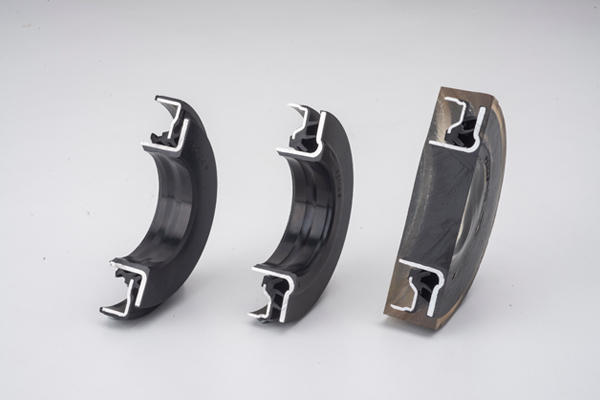
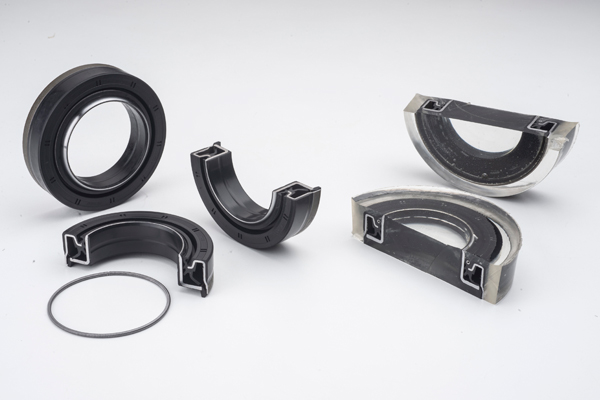
Rear axle combination oil seals — Combi-style configurations included — bring sealing and contamination exclusion together in a single, compact assembly. Depending on the specific design (dust lips, garter springs, molded flanges and different elastomers), they can shield rotating shafts and axle internals from dirt, moisture and the abrasive grit that builds up after a day in the field. For agricultural equipment — tractors, harvesters and the like, which routinely meet mud, chaff and standing water — these seals are worth evaluating because a plain oil seal often needs extra shields or protective boots to survive. They're not a cure-all: the right design and material for the duty, plus regular inspection, make the difference between long service life and an unexpected breakdown.
TCS catalog reference: Page 14.
3. Transmission Oil Seals
Transmission oil seals help retain lubricants and prevent leakage around rotating shafts in agricultural gearboxes and transmission assemblies. Depending on the application, a seal may incorporate multiple lips or additional design features to address lubrication and contamination-control requirements.
When sourcing agricultural transmission seals, buyers should confirm shaft speed, lubricant type, operating temperature, shaft finish, and available installation space.
TCS catalog reference: Page 5.。
4. Front Axle Cassette Seals
Front-axle cassette seals gather several sealing elements into a single, compact assembly. Depending on how they're configured, they can give you an extra layer of protection — keeping mud splashes, standing water and the fine, abrasive grit that likes to work its way into axle parts from causing trouble. For tractors and other agricultural machines that spend long days in churned, wet fields, cassette-style seals are worth considering when you need an all-in-one sealing solution that also guards against contamination.
TCS catalog references: Pages 14 and 15.
How Does Shaft Surface Finish Affect Agricultural Oil Seal Service Life?
Shaft surface finish is an important factor in rotary oil seal performance. A surface that is too rough may accelerate sealing-lip wear, while an excessively smooth surface or unsuitable directional machining marks may affect lubricant retention and sealing behavior.
For suitable rotary shaft applications, a non-directional ground surface finish with an Ra value of approximately 0.2–0.8 µm can serve as an initial engineering reference. The final specification should be confirmed against the selected seal design, shaft material, operating speed, lubrication conditions, and manufacturer's recommendations.
Proper shaft finishing, compatible seal materials, correct installation, and suitable contamination protection can help reduce premature wear and lubricant leakage. Although improved surface conditions may extend service life, the actual result depends on the complete application. Any specific improvement, including a potential threefold increase in service life, should be verified through application-specific testing rather than treated as a universal guarantee.
For agricultural seals exposed to soil, sand, mud, and water, OEM buyers should evaluate the complete sealing system. Important considerations include shaft finish, sealing-lip geometry, material compatibility, shaft alignment, housing tolerances, and installation quality.
Which Materials Are Best for Agricultural Oil Seals?
Picking the right material for agricultural oil seals is mostly about matching the seal to its working life: the temperatures it will see, whether the lubricants or any chemicals will attack it, the mechanical loads and movement it must tolerate, and if it'll be sitting in water, mud or sprayed with fertilizer or agrochemicals. Three common elastomer choices to weigh when you're developing seals for tractors, combines or sprayers are NBR, FKM and HNBR — NBR is a solid, cost‑effective option for general oil service, FKM offers strong heat and chemical resistance, and HNBR gives better heat, ozone and mechanical durability than standard nitrile.
NBR (Nitrile Rubber)
NBR offers good general oil resistance and cost efficiency. It is frequently considered for agricultural axle, wheel hub, and transmission applications where the operating conditions are compatible with the selected compound.
FKM (Fluoroelastomer)
FKM provides good resistance to heat and many oils and chemicals. It may be suitable for agricultural equipment operating at higher temperatures or under more demanding fluid-exposure conditions, subject to compound-specific compatibility.
HNBR (Hydrogenated Nitrile Rubber)
HNBR often offers better heat resistance, improved aging behavior, and stronger mechanical properties than standard NBR in many formulations. That's why it's commonly considered for agricultural seals that need to hold up under tougher conditions — imagine long, hot days in the sun, splashes of fertilizer, dust and crop debris, or long service intervals between maintenance. But don't choose solely by material name: the right seal depends on the actual service environment and on how the compound is formulated. Before approving seals for production, confirm with the manufacturer the operating temperature range, the exact lubricant and additives the seal will contact, shaft speed, likely contaminants, and the expected service interval — and, when feasible, validate the choice with application-specific testing or a short trial run.
What Performance Features Should Buyers Look for in Agricultural Seals?
If you make, import or sell agricultural equipment and spare parts, judge seals by the conditions the machines actually face: dusty fields, mud-packed axles, long hours under the sun, chemical sprays and long stretches between servicing. Wear resistance isn't just a line on a spec sheet — it comes from the right mix of material properties, surface finish and sealing‑lip geometry. A thin, razor‑sharp lip might seal perfectly at first, but in a gritty harvest it will abrade fast; a different hardness or a slightly fuller profile can accept a bit more friction and last far longer.
Aging resistance matters just as much. Pick elastomer compounds that will keep their flexibility and sealing force across the temperatures, ozone exposure, UV and contact with oils or crop chemicals they'll meet in service. I've seen seals look fine when installed and then develop hairline cracks after a hot season and a few chemical washes — those little changes are what let leaks begin.
So evaluate seals against the real use case: expected temperatures, contaminants, run time and maintenance intervals. That way the chosen material and lip design address the problems you'll actually see in the field, not just on paper.
Pick a compound that actually tolerates the oils and chemicals it will see in service — gear oil, hydraulic fluid, fuel residue or cleaning solvents — because incompatible materials can swell, harden or break down much sooner than you expect. Just as important is keeping the outside world out: seals should repel mud that packs into crevices, fine dust that grinds into bearings, and water from puddles or pressure‑washing so axles and rotating assemblies don't pick up a noisy, premature failure. And remember, a good seal plus proper installation isn't only about stopping a drip — it's about holding lubricant where it belongs so you can stick to sensible maintenance intervals instead of chasing leaks every other week.
Dimensional consistency isn't a nicety—it's the foundation. When dimensions are accurate and repeatable from one batch to the next, installation becomes predictable and the seals behave the same way across production runs. In the real world, an agricultural oil seal's performance is never down to a single factor: material compound, the geometry of the seal, how precisely it was made, the condition of the shaft it rides on, how carefully it's installed, and the environment it works in (think mud, dust, moisture, temperature swings) all interact. So when you're comparing seals from different manufacturers, don't pick one detail in isolation. Look at the whole picture together — tolerances and manufacturing consistency as much as material and design — and consider the actual conditions the seal will face in the field.
How Can OEM Buyers Choose a Reliable Agricultural Oil Seal Manufacturer?
Selecting an agricultural oil seal manufacturer involves more than comparing unit prices. OEM procurement teams need to consider engineering support, product consistency, customization capabilities, validation procedures, and long-term supply reliability.
1. Application Engineering and Technical Support
A competent supplier will want to review the shaft dimensions and housing specifications, plus the operating speed, lubricant type, temperature range and the kinds of contamination the seal will encounter. Even a rough sketch, a few measurements or a simple note about whether the environment is dusty, wet or oily makes a big difference — it lets the manufacturer choose the correct seal geometry and materials instead of guessing.
2. Material Selection and Compatibility
Ask whether the supplier can assess NBR, FKM, HNBR, or other suitable compounds against the actual operating environment. Material recommendations should account for fluid compatibility, temperature, mechanical stress, and expected service conditions.
3. Custom Tooling and Product Development
Farm equipment often needs seals that aren't off-the-shelf — odd diameters, uncommon lip profiles, or built-in defenses against the mud, straw and fine dust of harvest season. Suppliers that own their tooling and have in-house product development can prototype and tweak designs more quickly, test special lip geometries or add contamination barriers, and generally respond faster to an OEM's bespoke needs. That hands-on capability makes a real difference in the field: a better-fitting seal that actually keeps grit out means fewer surprise repairs and a lot less head-scratching at the worksite.
4. Testing and Quality Control
Ask about dimensional inspection, material verification, production controls, and application-relevant testing. Validation requirements should be defined according to the risk, complexity, and performance expectations of the intended application.
5. Production Capacity and Repeatability
Evaluate whether the manufacturer can support prototype development, initial sampling, production orders, aftermarket requirements, and repeat orders with consistent specifications.
6. Documentation and Traceability
Depending on procurement requirements, relevant documentation may include product drawings, material specifications, inspection records, and applicable quality-system documentation.
TCS Oil Seal supports customers through product engineering, tooling development, problem analysis, validation, and production. According to the company's provided information, its quality management certifications include ISO 9001 and IATF 16949.
When comparing international oil seal manufacturers, including established brands such as NOK and Freudenberg and suppliers in manufacturing markets such as Thailand and China, buyers should compare equivalent specifications, material requirements, validation evidence, lead times, and total cost of ownership. A supplier's suitability should be determined by its documented capabilities and ability to meet the project's requirements.
Where Can I Find an Agricultural Oil Seal Catalog?
The TCS oil seal catalog provides a starting point for identifying agricultural sealing products and reviewing their configurations.。
The available catalog references for agricultural machinery applications include wheel hub oil seals on pages 8, 14, and 15; rear axle combination oil seals, including Combi-style designs, on page 14; transmission oil seals on page 5; and front axle cassette seals on pages 14 and 15.
When requesting a quotation, provide the relevant catalog reference if available, together with the equipment model, shaft diameter, housing dimensions, operating conditions, and estimated order quantity.
If the required part is not listed in the catalog, ask whether a custom agricultural oil seal or an equivalent replacement can be evaluated. Drawings, sample parts, photographs, and details about the lubricant and operating environment can help the manufacturer assess feasibility.
For current product availability and specifications, visit the TCS Oil Seal website or contact the company directly.
Custom Agricultural Sealing Solutions from TCS Oil Seal
TCS Oil Seal — the trading name for Cheng Mao Precision Sealing Co., Ltd. — was founded in Nantou City, Taiwan, in 2007, although the people behind it bring more than 40 years of experience in the sealing world. They serve customers in over 40 countries and produce both standard and non‑standard oil seals, O‑rings, U‑cups, gaskets, packing and other rubber sealing components.
They develop tooling and handle product engineering in‑house, which means they can take a sealing requirement from an initial sketch or sample through design validation to full production. That integration often cuts down on miscommunication, keeps specifications tighter, and makes it easier to get consistent repeat orders out the door.
Are you looking for a supplier of oil seals suitable for agricultural machinery?
If you're a maker of agricultural machinery — tractors, harvesters, transmissions, wheel hubs or axle assemblies — or a component distributor, importer or aftermarket supplier, TCS can review your needs and recommend a standard or custom sealing solution. To get the conversation started, send them your technical drawings or sample parts, catalog references, expected operating conditions and estimated order quantities; those details help them propose materials, lip profiles and tolerances that'll stand up to muddy fields, heavy loads and seasonal demand.
Frequently Asked Questions About Agricultural Oil Seals
1. What are agricultural oil seals used for?
Agricultural oil seals are the quiet, work-hardened bits that keep lubricants where they should be and stop the field from getting inside moving parts. They keep out dust, clinging soil, splattered mud and rain so rotating assemblies — like tractor wheel hubs, front and rear axles, transmissions and other farm machinery components — can turn smoothly. Leave them out and you're likely to be scraping grit from bearings or topping up grease more often than you'd like after a long day in the field.
2. Which oil seal materials are commonly used in agricultural machinery?
NBR, FKM, and HNBR are common materials to evaluate for agricultural seals. NBR is often considered for general oil-sealing applications, FKM for higher-temperature or demanding fluid environments, and HNBR for applications requiring enhanced heat resistance and mechanical performance. The final choice depends on operating conditions and compound compatibility.
3. How can I extend the service life of agricultural oil seals?
Use a compatible seal material, follow the specified shaft surface finish, maintain proper shaft alignment and installation dimensions, and protect the sealing area from abrasive contamination. Regular inspections for leakage, shaft wear, and damaged sealing lips can also help identify problems before they cause more extensive equipment damage.
4. Can agricultural oil seals be customized for OEM production?
Yes. Custom agricultural oil seals can be developed to match specific shaft dimensions, housing requirements, sealing-lip profiles, material specifications, and contamination-protection needs. OEM buyers should provide technical drawings or sample parts and relevant operating conditions so the manufacturer can assess the design and validation requirements.
5. How do I choose between different agricultural oil seal manufacturers?
Compare application-engineering support, material options, custom tooling capabilities, manufacturing consistency, quality documentation, lead times, and order-volume requirements. Requesting samples and confirming performance requirements before mass production can help buyers assess whether a supplier meets their technical and commercial needs.
6. Can TCS Oil Seal support custom agricultural sealing projects??
TCS Oil Seal provides standard and customized sealing solutions, with capabilities covering product engineering, in-house tooling development, testing, and production. Buyers can submit drawings, samples, or application details for evaluation of suitable agricultural oil seals and other rubber sealing components.
7. What types of agricultural machinery oil seals does TCS oil seal supply?
Based on the currently available catalog information, the relevant products include wheel hub oil seals, rear axle Combi series combination oil seals, transmission oil seals, and front axle Cassette series box-type oil seals. For actual models, dimensions, and availability, it is recommended to directly contact TCS Oil Seals.
8. What information is required when inquiring about the price of agricultural machinery oil seals?
It is recommended to provide the equipment brand and model, oil seal size or part number, product drawings or used product samples, operating temperature, lubricating medium, rotational speed, environmental pollution level, and estimated purchase quantity. The more complete the information, the better it will help the manufacturer confirm specifications, evaluate materials and structure, and propose a suitable quotation.